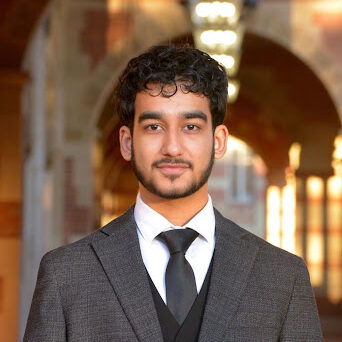
Raed Ahmed is a third-year student majoring in Cognitive Science with a minor in Digital Humanities and Public Affairs. As the group’s Project Manager, he focused on delegating tasks, scheduling meetings, and maintaining a cohesive, collaborative work environment for the team. Additionally, he helped refine the research questions and assisted with the project’s narrative. His favorite trip thus far has been solo backpacking across Costa Rica!
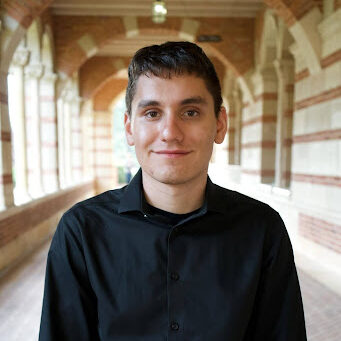
Stefan Chirica is a third-year Computer Science major and Statistics minor. He was an editor on this project, where he created some of the primary research questions and helped with the narrative, data critique, and some data visualizations. He has also been to Romania six times, with his favorite trip being this past summer.

Sarah Zhao is a first-year Computer Science and Engineering student. She helped format and design the website, alongside contributing to the narrative and the data visualizations. She has traveled to China a few times!
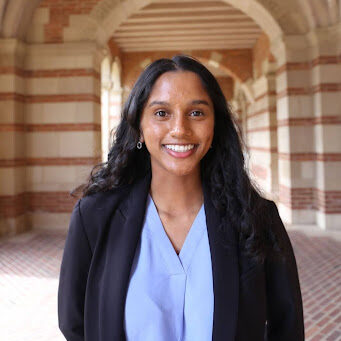
Trisha Sreedhar is a third-year student studying Business Economics and Statistics and Data Science. She is the Data Visualization Specialist. She helped create the timeline and some of the data visualizations. A place she is looking forward to traveling to is Antarctica.

Allen Chen is a third-year Statistics and Data Science major and history minor. His main roles were creating visualizations and parts of the timeline, brainstorming research questions, and writing parts of the narrative and data critique. His favorite trip was to the San Francisco Bay, where he enjoyed the views! Going there fulfilled a lifelong dream of his because he has always enjoyed Lee Oskar’s song, San Francisco Bay.

Keith Bui is a third-year Statistics & Data Science major with a (planned) minor in Data Science Engineering. His main role for this project was writing and editing the narrative and contributing to the data visualizations. His favorite trip I’ve been on was my trip to Japan in Winter 2025. It was his first time outside the United States, and it was one of the most eye-opening experiences he has had. He experienced an entirely different culture and lifestyle, and it was super enjoyable!
Selecting Sources
We selected a wide variety of sources from academic journals that span various fields such as public health, transportation, sociology, and urban planning. These sources were selected because they show that walkability is not just a physical or design feature of cities, but a socially structured outcome tied to income, race, health, and access to resources. Many of the studies show that walkability correlates with broader quality-of-life indicators such as obesity, diabetes, life satisfaction, housing values, and access to services, and also reveal uneven distribution of those indicators across communities.
Processing Data
Processing the data was not time-consuming. The Walkability Index dataset from the Environmental Protection Agency required little cleaning, aside from merging it with another dataset of CBSA names in Tableau. Additionally, the dataset included detailed documentation describing what each variable meant. This made it easier for us to identify which variables to analyze for our visualizations.
However, a few caveats with the data were that some variables in the documentation were not present in the dataset, which was slightly confusing. There was no variable for specific states or cities. Because of this, we had to use Core-based Statistical Areas (CBSAs) to examine specific cities. Additionally, when using Tableau, some of these CBSAs were unidentifiable, so they appeared as null. Despite these caveats, the U.S. Walkability Index dataset was a valuable resource and enabled our project workflow to progress seamlessly.
Presenting the Narrative
The main way we showcased our project is through WordPress because it enabled us to create a minimalistic website design that focuses on simplicity and interpretability rather than incorporating animations and other elements that may be distracting. This was done to enable a more accessible web design.
For our graphs and charts, we primarily used the Matplotlib and GeoPandas libraries in Python, Tableau, and TimelineJS to showcase our results in a visual form that is easily digestible for the reader. We ensured that the scales, legends, and position of labels were all consistent throughout, which is a best practice that Alberto Cairo stressed in his book How Charts Lie. Also, we verified that our map had minimal issues with biases in perception by overlaying walkable communities with where lower-income individuals are located, which showcases what Todd Presner and David Shepard discuss in the New Companion to Digital Humanities, where different phenomena do not exist in isolation.
In addition, the website contains visual elements such as photographs to aid in visualizing the narrative. During the website wireframing process, we wanted to orient the structure of the narrative to emphasize the importance of not only how walkability affects the quality of life for residents in a neighborhood, but also how different factors such as ethnicity, income, and car ownership can contribute to one’s lived experience of walkability in their neighborhood.
Acknowledgments
Dr. Nicholas Sabo
We want to express our gratitude to Dr. Sabo for demonstrating how to use many of the tools we used in this project, which were essential for cleaning, transforming, and visualizing the data.
Kai Nham
We want to extend our gratitude to our teaching assistant, Kai Nham, for his assistance in our project. His recommendations and insight into the data proved critical for the direction of analysis in our project.